





2025 | Author(s): B. Tse, F. Hartwich
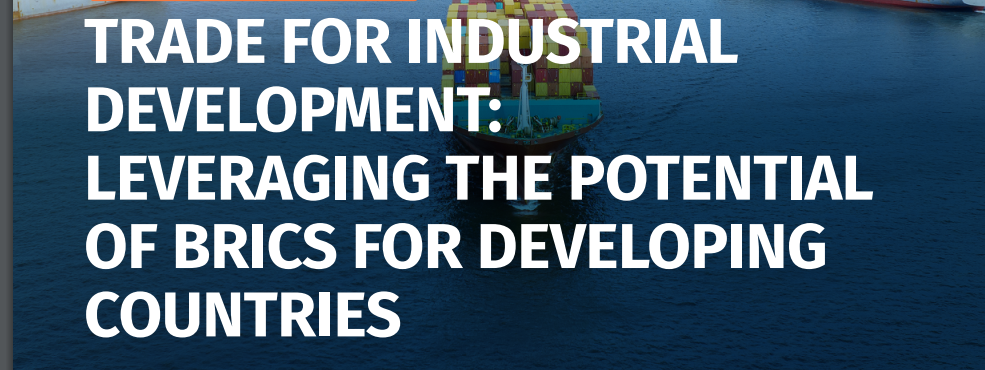
The expansion of BRICS to include Egypt, Ethiopia, Indonesia, Iran, and the UAE, alongside its growing network of partner countries, marks a significant development in global economic cooperation. With a combined GDP exceeding USD 28.5 trillion and a population of nearly four billion, BRICS now represents 27% of the world’s economy and continues to grow in influence. This expansion has reinforced BRICS as a major platform for trade, investment, and industrial collaboration among developing nations.
Growth in Trade and Investment
The economic engagement within BRICS has seen a substantial rise in intra-bloc trade, which has grown sevenfold between 2002 and 2021. In 2021 alone, trade among BRICS nations accounted for 13% of their total trade, highlighting the increasing role of the bloc in shaping global trade flows. At the same time, BRICS countries have also become significant players in foreign direct investment (FDI), with their share of global FDI inflows rising from 13.6% in 2002 to 22% in 2021.
While the BRICS framework does not function as a formal trade bloc with common trade policies or a single economic strategy, it has facilitated bilateral and regional agreements that reduce trade barriers and promote industrial collaboration. Additionally, some members have moved towards conducting trade in local currencies, aiming to enhance financial independence and stability within the group.
Industrial Development and Economic Diversification
BRICS economies have distinct sectoral strengths that complement each other. China leads in manufacturing and infrastructure, India specializes in technology and services, Russia has a strong presence in energy and resource-based industries, Brazil is a major agricultural producer, and South Africa has a wealth of mineral resources. This diversity has allowed the bloc to establish strategic industrial partnerships that support economic growth.
For developing countries engaging with BRICS, there are opportunities for industrial capacity-building, technology transfer, and infrastructure development. However, one challenge remains: trade with BRICS has not significantly altered the export composition of developing countries. Most continue to export raw materials and low-value-added products, with limited progress in industrialization. This underscores the need for greater efforts in enhancing production capabilities and value chain integration.
The Role of the New Development Bank (NDB)
Established in 2014, the New Development Bank (NDB) plays a key role in financing infrastructure projects and industrial initiatives across BRICS and its partner countries. With an initial capital of USD 100 billion, the NDB aims to address infrastructure gaps and support economic diversification. It provides an alternative financing mechanism, particularly for developing economies seeking long-term investments in energy, transportation, and industrial modernization.
Despite its potential, the NDB is still in the process of expanding its reach and developing stronger institutional frameworks. A more structured approach in funding industrial projects and supporting small and medium enterprises (SMEs) within BRICS economies could further enhance its impact.
Key Areas for Future Development
BRICS holds the potential to advance industrial development and economic integration through several key initiatives:
- Enhancing Participation in Global Value Chains – Developing countries can benefit from deeper integration into BRICS-centered industrial and manufacturing networks.
- Strengthening the NDB’s Financial Support – Expanding targeted investment programs for industrial and technological advancement can help foster long-term growth.
- Promoting Knowledge and Technology Sharing – Establishing platforms for research collaboration, technical training, and innovation hubs can support industrialization efforts.
- Supporting Economic Diversification – Encouraging policies that promote local value addition and processing industries can help developing countries move beyond commodity-based trade.
BRICS continues to expand its economic influence, with rising trade volumes, increasing investment flows, and new financial mechanisms shaping its role in global development. For both member states and partner countries, the bloc offers opportunities to enhance trade, develop industrial sectors, and promote financial cooperation. While challenges remain, particularly in equitable industrial development and balanced trade structures, the continued evolution of BRICS provides a framework for strengthening economic partnerships and fostering sustainable growth in the broader developing world.
Author Profile
Latest entries
 FEATURED24 July 2026SME Chamber of India Appoints Jhumarmal Tunwal, Chairman & Managing Director of Tunwal E-Motors as Vice President
 FEATURED23 July 2026Neuberg Diagnostics Cuts Manual HR Tasks by 90% Through AI-Powered HR Transformation with OfficeNet
 FEATURED23 July 2026Gen Z Insurance Advisors Lead in Policy Volumes, While Experienced Advisors Drive Deep Protection Conversations: Probus Report
 FEATURED16 July 2026Currys Business Expands Business Hub Network to Strengthen Technology Support for UK SMEs