


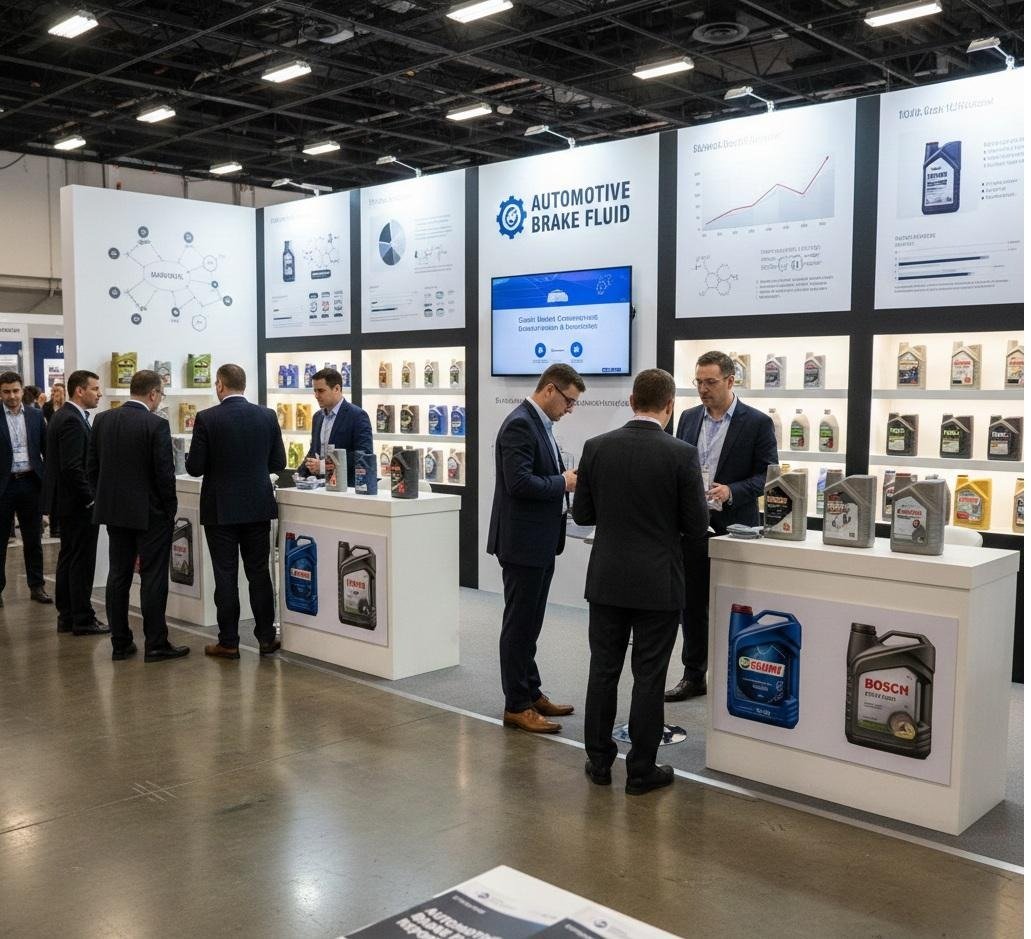
According to the Growth Market Report, the global automotive brake fluid market reached USD 3.1 billion in 2024, reflecting steady expansion driven by rising vehicle production and increasing demand for enhanced automotive safety systems. The market is projected to grow at a CAGR of 5.1 percent between 2025 and 2033, reaching an estimated value of USD 4.76 billion by 2033. Growth is supported by ongoing technological advancements in braking systems, tightening vehicle safety regulations, and the continued expansion of the automotive sector, particularly across emerging economies.
The global automotive brake fluid market is entering a phase of steady but structurally significant growth, reflecting broader transformations within the automotive industry. According to data from Growth Market Reports, the market was valued at approximately USD 3.1 billion in 2024 and is projected to reach USD 4.76 billion by 2033, expanding at a compound annual growth rate (CAGR) of 5.1 percent between 2025 and 2033. While the expansion appears moderate in numerical terms, the underlying drivers indicate a deeper transition—from a commodity-oriented product category toward a technology-sensitive component closely tied to vehicle safety, system integration, and regulatory compliance.
Repositioning Brake Fluid in the Automotive Value Chain
In public discourse around mobility transformation, attention tends to concentrate on electrification, autonomous driving systems, or battery technologies. Yet braking systems remain among the most critical safety subsystems in any vehicle architecture. Brake fluid functions as the hydraulic medium that translates driver input or electronic commands into mechanical stopping force. Its reliability directly affects vehicle control, response time, and operational safety.
Unlike conventional automotive consumables, brake fluid operates under demanding conditions. It must maintain consistent viscosity across temperature extremes, resist moisture absorption, avoid vapor formation at high temperatures, and remain chemically stable over extended service intervals. As braking systems increasingly interact with anti-lock braking systems (ABS), electronic stability control (ESC), advanced driver assistance systems (ADAS), and regenerative braking mechanisms, the functional expectations placed upon brake fluids have expanded considerably.
Technical Evolution and Product Segmentation
The market continues to be dominated by glycol-based fluids, particularly DOT 3, DOT 4, and DOT 5.1 classifications, which offer a balance between performance and cost efficiency. These formulations are widely used in passenger vehicles and light commercial vehicles due to their compatibility with contemporary braking architectures and established manufacturing ecosystems.
Silicone-based fluids, categorized as DOT 5, represent a smaller but stable niche. Their resistance to moisture absorption and longer storage life makes them suitable for specialty applications such as military vehicles or classic automotive segments. However, compatibility limitations with modern braking components restrict their broader adoption.
More recently, hybrid and advanced formulations have begun gaining traction. These products are designed to support low-viscosity performance required by electronically controlled braking systems while maintaining high thermal stability. The shift reflects a growing convergence between chemical engineering and electronic system requirements within vehicle design.
Structural Drivers of Market Growth
Several structural forces are shaping demand patterns within the automotive brake fluid market.
Electrification of vehicle platforms is one of the most significant factors. Electric vehicles rely extensively on regenerative braking, which reduces routine friction braking but introduces higher thermal stress during sudden or high-load braking events. This operational pattern increases the need for fluids capable of maintaining stability despite irregular usage cycles and higher temperature spikes.
Regulatory pressures are also contributing to market evolution. Across major automotive markets, braking performance standards and safety regulations are becoming more stringent, compelling original equipment manufacturers (OEMs) to adopt higher-grade fluids with improved performance characteristics.
At the same time, expansion in global vehicle ownership, particularly across emerging economies, is strengthening aftermarket demand. Brake fluid replacement remains a recurring maintenance requirement, and rising awareness of preventive maintenance is gradually expanding consumption volumes beyond OEM channels.
Innovation at the Intersection of Chemistry and Electronics
Technological innovation within the brake fluid segment is increasingly oriented toward system responsiveness and durability rather than basic hydraulic functionality. Low-viscosity formulations enable faster pressure transmission, which is essential for vehicles equipped with automatic emergency braking and other software-controlled safety features. In such systems, milliseconds of response time can significantly influence stopping distance and accident avoidance outcomes.
Manufacturers are also investing in extended service-life formulations that retain performance characteristics over longer operational cycles. This development aligns with fleet management priorities, where reduced downtime and maintenance intervals translate into operational cost savings.
Sustainability Considerations and Environmental Pressures
Environmental considerations are gradually influencing formulation strategies. Brake fluids contain chemical additives that require careful disposal, and regulatory scrutiny around automotive fluids is increasing in several jurisdictions. Industry efforts are therefore focusing on reducing toxic components, improving degradation characteristics, and extending fluid lifespan to reduce overall consumption volumes.
Although recycling brake fluid remains technically complex due to contamination and chemical stability issues, longer service intervals represent an indirect but practical pathway toward reducing environmental impact.
Regional Market Dynamics
Market dynamics vary significantly across regions. In North America and Europe, growth is largely value-driven, with demand concentrated around premium and OEM-approved formulations supporting advanced braking technologies. Vehicle parc expansion in these regions is relatively stable, limiting volume growth but encouraging product innovation.
In contrast, Asia-Pacific and other emerging automotive markets continue to experience growth driven by rising vehicle ownership, improving service networks, and increasing consumer awareness of vehicle safety standards. These regions are expected to remain central to volume expansion in the coming decade.
Competitive Landscape
The market remains moderately consolidated, with major chemical and energy companies playing dominant roles. Key participants include BASF SE, Robert Bosch GmbH, Dow Inc., Chevron Corporation, FUCHS Petrolub SE, Valvoline Inc., TotalEnergies SE, Shell plc, Castrol Limited, ExxonMobil Corporation, Sinopec, Motul S.A., BP plc, PETRONAS, Lukoil, Repsol S.A., Huntsman Corporation, Sasol Limited, and Blue Star Lubrication Technology Co., Ltd. Competition increasingly revolves around formulation performance, OEM partnerships, and compliance with evolving safety and environmental standards.
Outlook: A Quiet but Strategic Transformation
The automotive brake fluid market is gradually transitioning from a maintenance-oriented consumables segment into a technologically differentiated safety domain. Future demand will be shaped by software-controlled braking systems, autonomous vehicle safety requirements, and the thermal challenges associated with heavier electrified vehicle architectures. At the same time, growing consumer awareness around preventive maintenance is likely to reinforce aftermarket demand.
Brake fluid may remain largely invisible to end users, but its technological evolution reflects a broader truth about modern mobility: as vehicles become more intelligent and complex, even the most understated components assume strategic importance in ensuring safety and reliability.
Author Profile
Latest entries
 News15 March 2026Qualys Named a Leader in 2026 Forrester Wave™ for Cloud-Native Application Protection Solutions
 News13 March 2026Digital Asset Management Market Forecast to Reach USD 17.3 billion by 2033
 FEATURED25 February 2026Thane’s Wagle Estate as a Key Commercial and Business Destination
 FEATURED16 February 2026Automotive Brake Fluid Market: From Consumable Input to Safety-Critical Technology Segment