



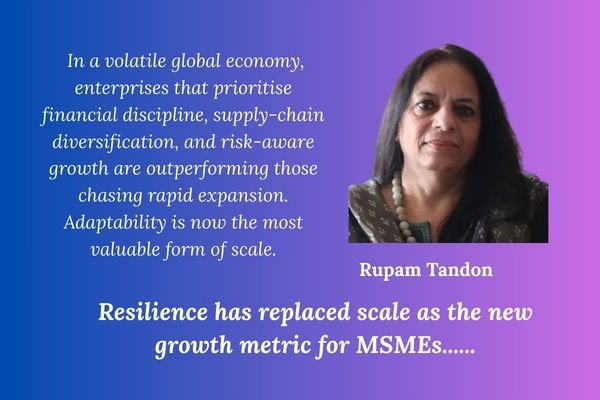
For much of the past decade, the MSME narrative has revolved around survival — navigating pandemics, supply-chain shocks, inflation, and capital constraints. Today, that narrative is decisively changing. Across regions, MSMEs and startups are no longer just adapting to disruption; they are strategically reshaping how growth is defined and delivered in a fractured global economy.
The current environment is marked by geopolitical realignment, higher interest rates, shifting trade corridors, and rapid technological acceleration. In this context, traditional growth models built on scale, leverage, and cost arbitrage are losing relevance. What is emerging instead is a new MSME playbook grounded in resilience, agility, and trust.
Three structural shifts stand out.
First, resilience has overtaken expansion as a strategic priority. MSMEs are strengthening balance sheets, diversifying suppliers, regionalising supply chains, and taking a more disciplined approach to capital deployment. Growth is being pursued with risk awareness, not blind optimism. This shift is particularly visible among export-oriented SMEs and venture-backed startups recalibrating their paths to profitability.
Second, digital capability is no longer optional or experimental. Cloud platforms, data analytics, AI-enabled tools, and digital payments have become core operating infrastructure. For MSMEs, technology is not just improving efficiency; it is enabling compliance, transparency, customer access, and cross-border participation. Digital maturity increasingly determines whether an enterprise can integrate into global value chains.
Third, trust has become a decisive economic asset. Access to capital, partnerships, and markets is now influenced by governance quality, ethical conduct, and ESG credibility. MSMEs are discovering that sustainability reporting, sound governance practices, and workforce responsibility are not burdens imposed by regulators or large enterprises — they are enablers of long-term relevance and competitiveness.
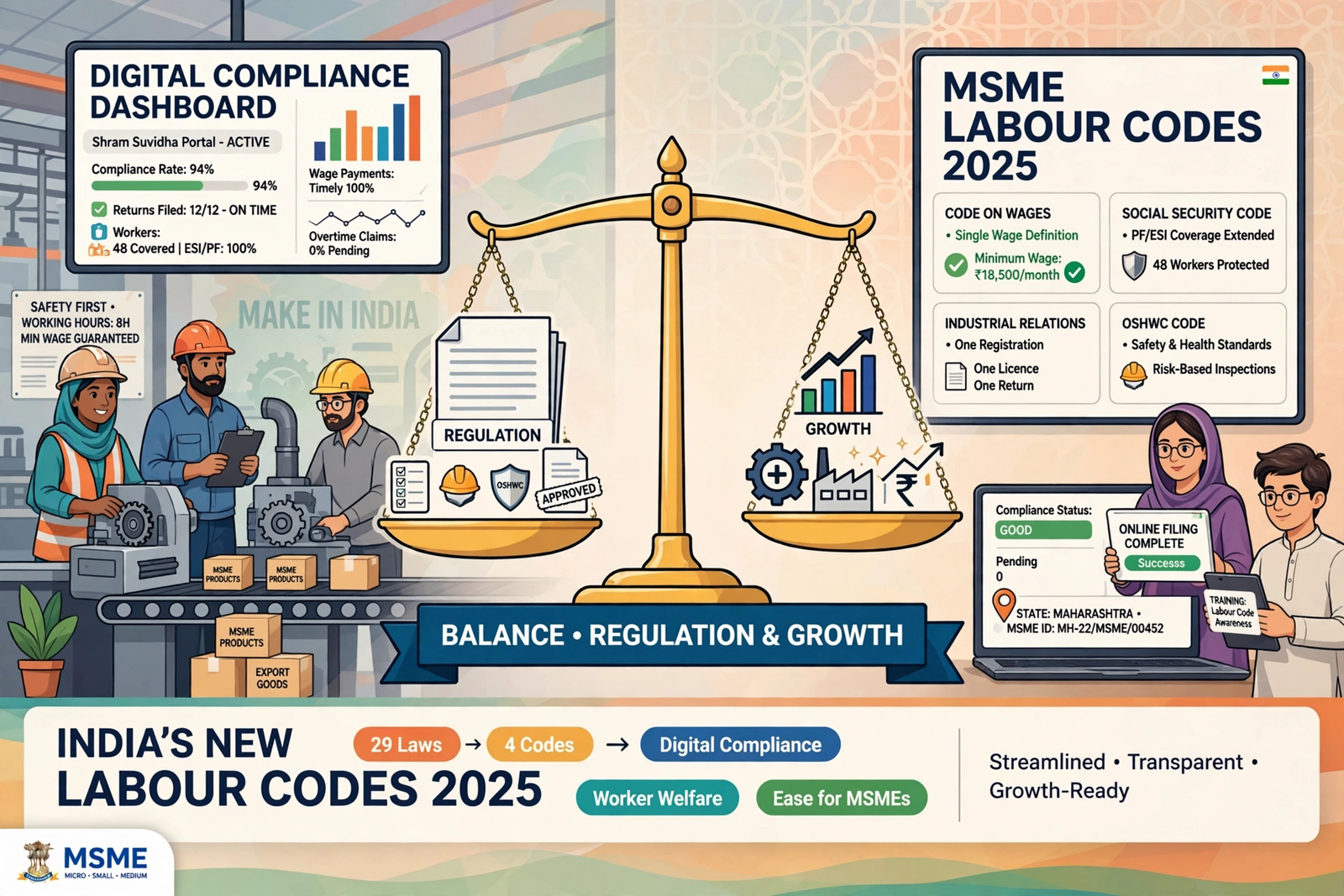
Public policy plays a defining role in this transition. Governments that simplify regulation, improve credit access, invest in digital public infrastructure, and create predictable policy environments are accelerating MSME formalisation and growth. Conversely, fragmented compliance regimes, policy uncertainty, and high transaction costs continue to suppress enterprise potential, particularly in emerging markets.
Across boardrooms, policy discussions, and enterprise engagements, this shift from survival to strategy is already underway.
The next decade of global growth will not be driven solely by large corporations or capital-heavy models. It will be shaped by MSMEs that can align strategy with resilience, technology with trust, and ambition with governance. In a world where uncertainty is the norm, adaptability has become the most valuable form of scale.
For MSMEs and startups, the question is no longer how to survive disruption — but how to lead through it.
Author Profile

-
Rupam Tandon is a seasoned financial services leader, global strategist, board advisor, and governance evangelist with over three decades of experience spanning investment banking, strategic advisory, board leadership, and startup governance. Her career reflects a blend of domain depth in financial services and an evolving commitment to strengthening corporate and startup governance frameworks.
Rupam’s professional journey began in financial markets and investment banking where she held senior roles with leading global institutions. Over her 30+ year career she has built expertise in banking, compliance, risk management, strategic partnerships, and organizational transformation across diverse regions including India, the United Kingdom, the United Arab Emirates, and North Africa. Her international leadership experience has equipped her with a nuanced perspective on global financial systems, cultural business dynamics, and cross-border governance practices.
In addition to her executive track record, Rupam carries the credential of a Certified Independent Director and is regularly invited to speak at industry forums on governance, risk, and ethics. She is active in advisory circles and contributes to shaping governance discourse for boards and leadership teams, especially in scaling organizations and emerging enterprises.
A thought leader in startup governance, Rupam contributed a specialist chapter on governance in the Enterprising Futures: Global SME Insights 2025 report, where she articulated how pragmatic governance structures act as strategic levers for resilience and investor trust in early-stage ventures. Her insights bridge best practices from established corporates with the agility needs of startups.
Beyond boardrooms, Rupam mentors' women leaders, advises founders on governance readiness, and advocates for ethical leadership as a catalyst for sustainable value creation in enterprises of all sizes.
Latest entries
 AI1 August 2026Beyond Headcount: How AI is Redefining Startup Growth
 FEATURED27 January 2026From Survival to Strategy: How MSMEs Are Redefining Growth in a Fragmented Global Economy
 Leadership19 October 2025Family Businesses 2.0: Balancing Tradition with Modern Governance
ESG11 September 2025The Governance Premium: Why Trust Outperforms Growth