




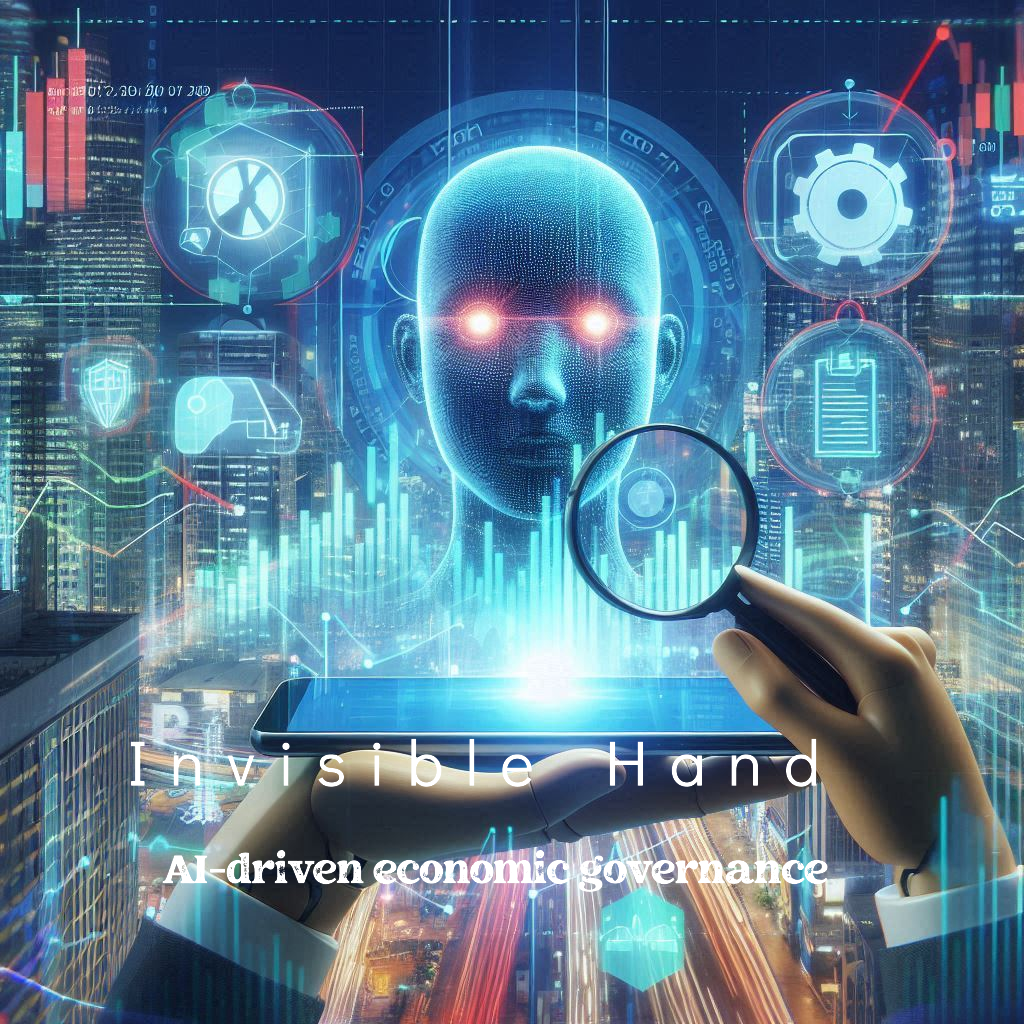
For centuries, economic systems have depended on human decision-making, regulatory institutions, and ideological frameworks to manage resource allocation, production, and distribution. Capitalism uses market forces, socialism depends on planning, and mixed economies attempt a balance. But a new paradigm is emerging—AI-driven economic governance—where supercomputers and real-time data analytics play a central role in optimizing efficiency, enforcing transparency, and reducing economic distortions.
Can AI become the 21st-century ‘Invisible Hand’—a more advanced and precise version of Adam Smith’s concept—ensuring a self-regulating, bias-free economy? Or does it risk creating a system that erodes human agency and stifles innovation?
Soviet Cybernetic Planning: A Lost Opportunity for AI-Driven Economy
The concept of an AI-driven economy has roots in past attempts to use computational models for centralized economic planning. One of the most ambitious projects was the General State Automated System (OGAS), proposed by Viktor Glushkov in the 1960s. OGAS aimed to create a nationwide computer network to dynamically update economic plans based on real-time data from enterprises and consumers.
However, despite its potential, OGAS largely remained a theoretical endeavor, facing resistance from the Soviet bureaucracy, which feared a loss of political control over economic planning. Additionally, technological constraints and inaccurate data reporting from enterprises made implementation impractical. The project was ultimately abandoned, reinforcing the limitations of central planning in an era when real-time data processing was not yet feasible.
AI as the Supercomputer-Regulated Market Force
Traditional markets suffer from inefficiencies, information asymmetry, and bureaucratic delays. AI can potentially eliminate these distortions by:
- Real-time monitoring to detect supply-demand imbalances and optimize resource allocation.
- Automated regulatory enforcement, ensuring businesses comply with taxation, trade laws, and corporate ethics.
- Bias-free decision-making, removing human favouritism in licenses, permits, and government contracts.
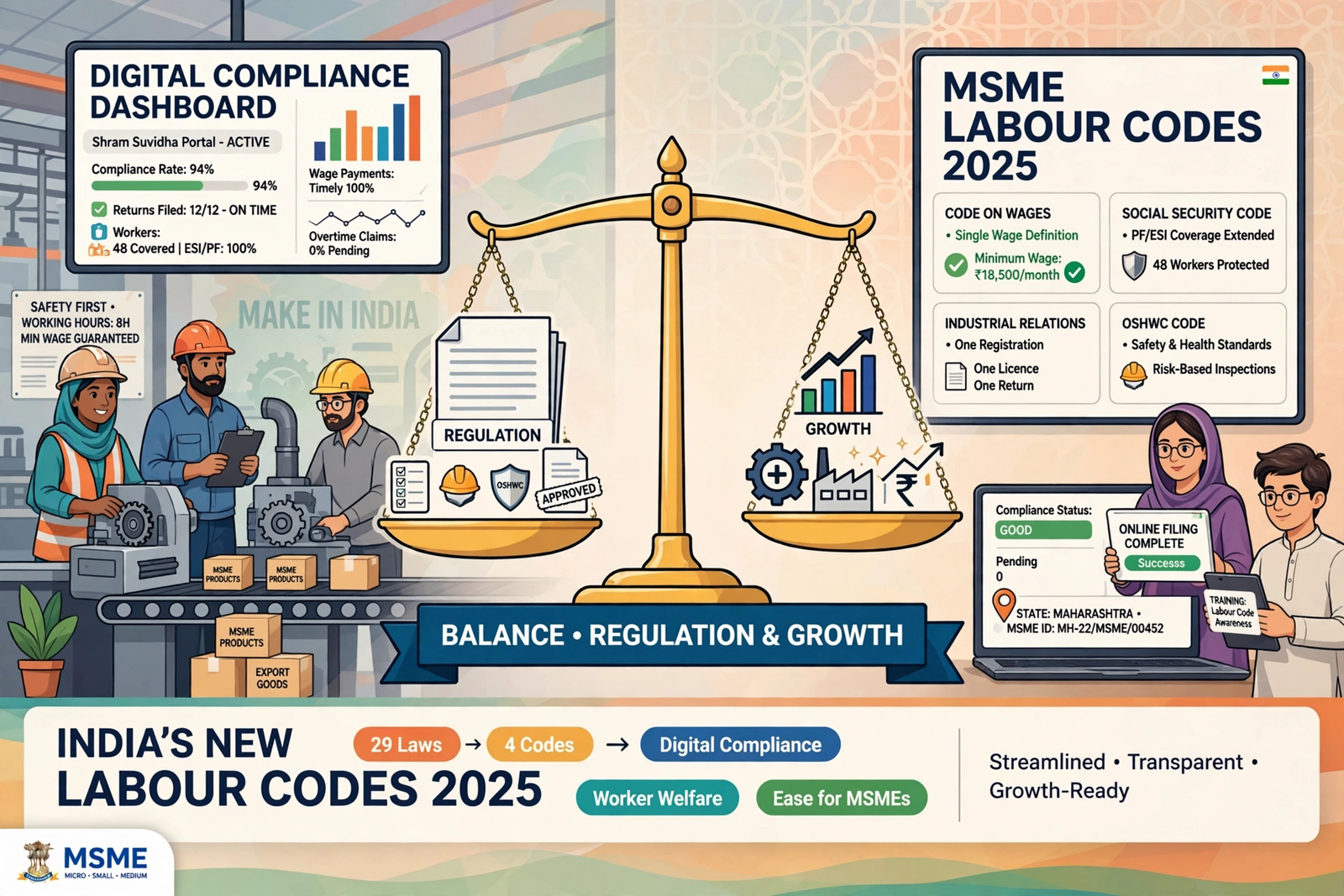
- Monitoring and strict enforcement of labor laws
- Ensuring that environmental standards, worker rights, and fair labor practices are upheld in real-time.
- Large-scale interconnected AI networks that continuously assess compliance across industries, preventing exploitation and reinforcing ethical business operations.
By continuously analyzing economic data, AI ensures that markets remain efficient, fair, and corruption-free. Unlike centralized planning failures of the past (e.g., the Soviet Union’s OGAS system), AI offers decentralized, adaptive planning that evolves in real time.
Can AI Ensure Market Inclusion and Fairness?
One of the biggest challenges in global economies is market exclusion, where small businesses and marginalized communities struggle for fair access. AI can:
- Automate digital credit scoring, enabling financial inclusion for unbanked entrepreneurs.
- Eliminate hiring and lending biases, ensuring decisions are based on merit, not privilege.
- Predict and prevent economic crises, allowing governments to act before recessions deepen.
If implemented ethically, AI can create a market that is not only efficient but also equitable.
Ethical Risks: The AI Economy Needs Guardrails
- However, AI’s dominance in economic decision-making raises a number of fundamental ethical concerns:
- Threat to Human Autonomy – Will AI limit innovation and entrepreneurship by automating too many economic functions?
- Corporate and Government Overreach – Can AI-driven economies be manipulated by tech monopolies or authoritarian governments?
- Algorithmic Bias – Even AI can reinforce inequalities if its training data carries historical biases.
- Lack of Accountability – Who governs AI? Governments must implement AI ethics boards and transparent regulations.
The Future: AI as an Enabler, Not a Controller
Rather than replacing human decision-making, AI should serve as an economic enabler—enhancing transparency, eliminating corruption, and ensuring fairness. Policymakers must strike a balance: Use AI for market regulation, not market domination. And ensure human oversight in AI-driven economic policies. Further, its important to develop legal frameworks to prevent monopolization of AI-driven decision-making.
AI has the potential to revolutionize economies, but its success will depend on how we regulate, programme, and govern it. If designed for the collective good, AI could become the most powerful force for economic fairness the world has ever seen—but if left unchecked, it could lead to an era of algorithmic authoritarianism.
The question is no longer whether AI will shape the economy—it is who will shape the AI-driven economy.
Author Profile

-
Dr. Perumal Koshy is associated with the Enterprise Futures Lab and is a columnist focused on institutional governance and economic systems. He writes on MSMEs, enterprise development, and policy issues affecting small business ecosystems.
Linkedin: https://www.linkedin.com/in/caushie/
Latest entries
 FEATURED18 July 2026The New Generation of FTAs: Why Services Are Replacing Tariffs as the Main Trade Issue
 FEATURED11 July 2026Beyond Startup Disruption: Why Innovation Must Strengthen Industrial Ecosystems, Not Weaken Them
 FEATURED13 June 2026Beyond Startups and SMEs: Towards an Integrated Enterprise Ecosystem for the Future
 ESG6 June 2026The Scale Obsession: When Institutions Become Bigger Than Their Purpose