


The recently concluded China–Singapore Youth Dialogue in Singapore offers more than a symbolic exchange of ideas—it signals an emerging shift in how younger generations are positioning themselves within evolving technological, cultural, and ecological systems. Convened under the theme “Building Tomorrow: Youth Voices United,” the dialogue brought together a cross-section of young practitioners operating at the intersection of artificial intelligence, creative industries, and sustainability transitions.
Co-organized by the People’s Daily and Lianhe Zaobao, the forum reflects a broader pattern of deepening knowledge exchanges between China and Singapore—two economies that, while structurally distinct, share a strategic emphasis on innovation-led growth and human capital development.
Beyond “AI Anxiety”: Reframing Technological Transitions
The first panel, Youth Driving Tech Innovation, moved beyond the often simplistic narrative of automation-induced job displacement. Instead, it framed artificial intelligence as part of a broader structural reconfiguration of labour and value creation.
Participants from robotics, digital verification, and emerging mobility sectors emphasized that the discourse around “AI anxiety” frequently overlooks the dynamic nature of labour markets. As highlighted by industry practitioners, technological transitions historically generate new occupational categories even as they disrupt existing ones. The implication is clear: adaptability, rather than resistance, will define labour resilience.
This perspective aligns with current empirical observations across innovation ecosystems—where roles in robotics engineering, AI ethics, and data infrastructure are expanding faster than traditional job categories are declining. The underlying message from the panel was not technological determinism, but institutional and individual preparedness.
Equally significant was the entrepreneurial framing introduced during the discussion. In fast-evolving sectors, entry barriers are increasingly cognitive rather than structural. The assertion that “nothing is holding you back” reflects a shift toward decentralized innovation, where access to knowledge networks and digital tools reduces dependency on traditional capital-intensive pathways.
Cultural Continuity as Economic and Social Capital
The second panel, Contemporary Renewal of Traditional Culture, introduced a critical counterpoint to hyper-technological narratives. It underscored that innovation is not exclusively rooted in disruption; it is equally embedded in reinterpretation.
Artists and cultural practitioners demonstrated how traditional forms—wood sculpture, textile traditions, paper art, and heritage-inspired design—are being repositioned within contemporary markets. This is not merely aesthetic revivalism; it represents a form of cultural entrepreneurship where heritage becomes both identity and economic asset.
In this context, traditional culture functions as a stabilizing force within rapidly changing societies. It provides continuity, meaning, and a form of intangible capital that resonates strongly with younger generations navigating uncertainty.
The articulation of culture as a “spiritual haven” is particularly relevant in high-growth economies where material advancement often outpaces social cohesion. By embedding tradition within modern creative industries, young practitioners are effectively constructing hybrid value systems—where authenticity coexists with global relevance.
Sustainability as a Systems Question, Not a Sectoral One
The final panel, Jointly Building a Sustainable Future, expanded the discourse from sector-specific interventions to systemic thinking. Contributions from architecture, fashion, and marine conservation highlighted that sustainability is no longer confined to environmental policy—it is becoming a foundational principle across disciplines.
Architectural perspectives emphasized “being-with” as a design philosophy, suggesting that built environments must move from extraction-oriented models toward coexistence-based frameworks. This aligns with emerging global approaches to regenerative design, where buildings are conceived as part of ecological systems rather than isolated structures.
Similarly, discussions on fashion reframed sustainability as a cultural logic rather than a compliance requirement. The assertion that sustainability should be “culture-based and do no harm” reflects a transition from regulatory sustainability to embedded sustainability—where ethical considerations are internalized within production processes.
Marine conservation voices added another dimension by emphasizing stewardship. The metaphor of being a “gardener underwater” captures a shift from exploitation to custodianship, particularly among younger generations increasingly engaged in ecological restoration efforts.
Strategic Implications: Youth as System Builders
What distinguishes this dialogue is not merely the diversity of themes, but the coherence of its underlying narrative. Across technology, culture, and sustainability, a common thread emerges: young people are not positioning themselves as passive participants in change, but as active system builders.
This has several implications:
- Innovation ecosystems are becoming more interdisciplinary, blurring boundaries between technology, design, and social sciences.
- Cultural capital is gaining renewed economic relevance, particularly in creative and experience-driven industries.
- Sustainability is transitioning from policy discourse to operational philosophy, embedded within everyday decision-making.
For China and Singapore, this convergence is strategically significant. Both countries are investing heavily in future-oriented sectors—AI, green infrastructure, and digital trade. Youth-driven dialogues such as this function as informal policy laboratories, where ideas are tested, reframed, and potentially scaled.
Toward a Long-Term Knowledge Partnership
The China–Singapore Youth Dialogue ultimately reflects a deeper evolution in bilateral engagement—moving from state-centric cooperation to knowledge-driven, people-to-people ecosystems.
By foregrounding youth perspectives, the initiative captures a critical reality: the future of economic systems will not be shaped solely by institutions, but by the cognitive frameworks, values, and collaborative capacities of the next generation.
In that sense, the dialogue is less an event and more an indicator of transition—toward a world where innovation is human-centred, culture is economically relevant, and sustainability is structurally embedded.
Author Profile
Latest entries
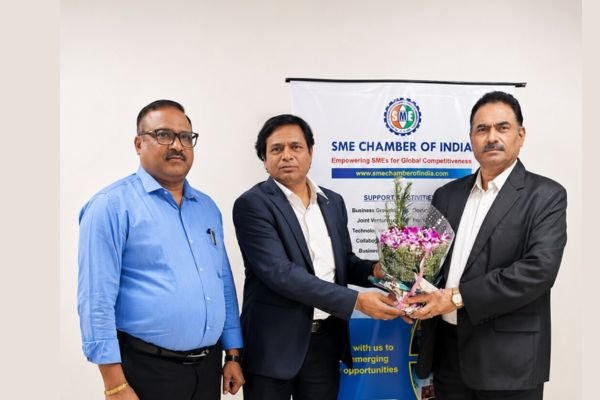
 FEATURED24 July 2026SME Chamber of India Appoints Jhumarmal Tunwal, Chairman & Managing Director of Tunwal E-Motors as Vice President
 FEATURED23 July 2026Neuberg Diagnostics Cuts Manual HR Tasks by 90% Through AI-Powered HR Transformation with OfficeNet
 FEATURED23 July 2026Gen Z Insurance Advisors Lead in Policy Volumes, While Experienced Advisors Drive Deep Protection Conversations: Probus Report
 FEATURED16 July 2026Currys Business Expands Business Hub Network to Strengthen Technology Support for UK SMEs