



India’s medical device industry has expanded rapidly in recent years, growing from an estimated $5 billion in 2020–21 to around $18 billion today, as manufacturing capacity, technology adoption and exports increase across the sector.
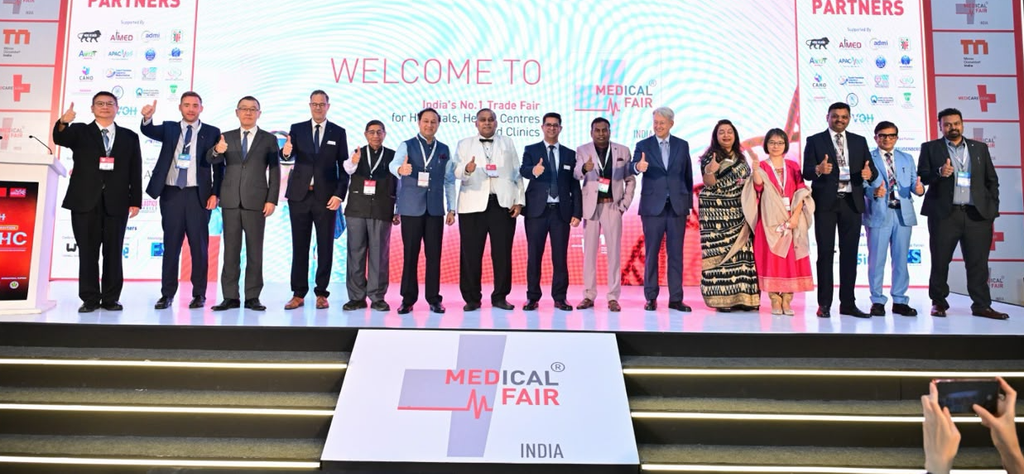
The developments were highlighted at Medical Fair India 2026, organised by Messe Düsseldorf India at the Bombay Exhibition Centre in Mumbai. The three-day event brought together more than 500 exhibiting brands from over 10 countries, providing a platform for medical device manufacturers, healthcare providers, technology companies, distributors and investors to explore emerging opportunities in the global MedTech industry.
The exhibition focused on several of the major trends reshaping healthcare, including artificial intelligence, digital and sustainable healthcare, advanced medical technologies, hospital systems, clinical innovation and international partnerships.
Dr Rajiv Chhibber, Joint Forum Coordinator of the Association of Indian Medical Device Industry (AiMeD) and a member of the Medical Fair India 2026 Advisory Committee, said the medical device sector had moved beyond its traditional position as an import-dependent segment of the pharmaceutical industry.
According to Chhibber, manufacturing in India has increased by more than 100%, supported by government initiatives including production-linked incentives and the PRIP scheme. He noted that Indian medical devices are now exported to approximately 187 countries.
He also stressed that the sector’s next phase of development would require greater attention to patient safety, ethical marketing, pricing and investment in innovation. Unlike pharmaceuticals, medical devices operate within rapidly changing technological cycles, requiring manufacturers to continually invest in research, product development and technological upgrades.
The broader global significance of the sector was underlined by Lars Wismer, Regional Head of Messe Düsseldorf for Asia. He described India as an increasingly important MedTech market and manufacturing base, noting that the country is moving from a predominantly importing market towards a larger role as a manufacturer and supplier.
“India is definitely a growing market of the future,” Wismer said, adding that the wider Asian market is experiencing faster adoption of medical technologies than many European markets. He also emphasised the importance of exhibitions such as Medical Fair India in facilitating knowledge exchange, technology partnerships and connections between manufacturers and buyers.
The event also highlighted the growing role of small and medium-sized enterprises, startups and technology innovators in the medical technology ecosystem. Ajay Kumar Gulati, General Manager, Messe Düsseldorf India, said the objective was to bring smaller innovators onto the same platform as established healthcare companies.
The technologies showcased ranged from surgical devices and cardiac implants to medical imaging, digital health and other healthcare technologies. Artificial intelligence emerged as an important area of interest, particularly its potential to improve healthcare delivery while helping to contain costs.
Medical Fair India also placed emphasis on the changing priorities of healthcare systems. While affordability, availability and accessibility have traditionally formed the core of healthcare policy discussions, organisers highlighted a fourth dimension — advancement — reflecting the growing importance of access to newer and more sophisticated medical technologies.
The international participation at the exhibition included companies and stakeholders from Brazil, China, Germany, Italy, Japan, Malaysia, Singapore, South Korea and the United States, alongside Indian participants. The diversity of participation reflects the increasingly international character of the medical technology supply chain and the opportunities emerging around manufacturing, technology partnerships and healthcare innovation.
With medical devices becoming increasingly integrated with artificial intelligence, digital systems, advanced materials and data-driven healthcare, the industry is moving beyond conventional equipment manufacturing towards a broader technology ecosystem. The developments highlighted at Medical Fair India point to growing opportunities for manufacturers, technology providers, startups and specialised suppliers across the global MedTech value chain.
Author Profile
Latest entries
 Business25 September 2026Medical Device Industry in India Reaches $18 Billion as MedTech Manufacturing Gains Global Momentum
 FEATURED24 July 2026SME Chamber of India Appoints Jhumarmal Tunwal, Chairman & Managing Director of Tunwal E-Motors as Vice President
 FEATURED23 July 2026Neuberg Diagnostics Cuts Manual HR Tasks by 90% Through AI-Powered HR Transformation with OfficeNet
 FEATURED23 July 2026Gen Z Insurance Advisors Lead in Policy Volumes, While Experienced Advisors Drive Deep Protection Conversations: Probus Report