





July 19 2024 #GlobalCyberOutage, triggered by a #CrowdStrike software update, severely disrupted industries ranging from travel to finance, highlighting the risks inherent in our reliance on digital and interconnected technologies. This incident underscores the urgent need for preparedness in a digitally dependent world. Organizations must recognize the inevitability of cyber disruptions and develop robust contingency plans that ensure operational continuity. This involves not only securing data but also preparing for large-scale data transmission and internet blockages. Ensuring that business operations can continue smoothly amidst unforeseen disruptions is crucial for navigating the complexities of our interconnected world.Future preparedness will much depend on a strategy that adopts technologies enhancing efficiency without replacing human capital.
The recent global cyber outage, which caused widespread disruption across various sectors, has brought to the forefront critical questions about our readiness for such events. As the world becomes increasingly digital, with even small businesses and industries adopting sophisticated digital tools, the potential for significant disruptions grows exponentially. Are we truly prepared to handle such eventualities? Can we afford a large-scale shift to digitalization and automation without a robust contingency plan?
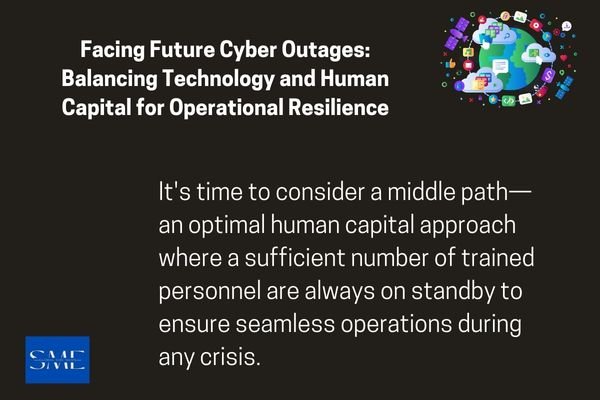
It’s time to consider a middle path—an optimal human capital approach where a sufficient number of trained personnel are always on standby to ensure seamless operations during any crisis. Relying solely on rapid hiring, training, and onboarding in the short term is not viable, as the associated losses can be substantial. Instead, a more effective strategy involves maintaining an optimal level of manpower, equipped with specialized training to manage and operate organizational functions smoothly, even during disruptions.
The recent cyber outage, linked to a Crowdstrike cybersecurity software update, is neither the first nor the last of its kind. Future incidents are inevitable. Organizations of all types—entrepreneurs, small businesses, medium or large enterprises, service businesses, retail trades, e-commerce platforms, and government entities—must recognize that cyber outages are a real threat. Preparedness is crucial, not just in terms of data security and multi-level data protection, but also in maintaining operational continuity during large-scale global data transmission and internet blockages.
Every level of an organization must be equipped to operate traditionally. Transactions should remain possible in physical mode, ensuring that life goes on even if all digital systems and internet connectivity fail. This preparedness requires not just robust systems and secure data storage across multiple locations, but also accessible emergency protocols that allow operations to continue with the same efficiency.
Human capital plays a crucial role in this preparedness. Organizations cannot rely on rapid hiring and training in the midst of a crisis. A balanced approach to automation and human resources is essential. The presence of adequately trained personnel should not be underestimated; it is vital for maintaining operational stability and resilience. In essence, an optimal human capital strategy is not just beneficial but necessary to navigate the digital landscape’s uncertainties and ensure a smoother continuation of life and business during unforeseen disruptions.
In light of these considerations, it is imperative that organizations adopt a proactive stance. This involves investing in comprehensive training programs for employees at all levels, ensuring they are well-versed in both digital and traditional operational methods. Additionally, contingency plans must be regularly updated and tested to ensure their effectiveness during actual crises.
The rapid pace of technological advancement should not blind us to the inherent vulnerabilities that come with increased digital dependency. By balancing our embrace of automation with a robust investment in human capital, we can build a more resilient framework for the future. This approach not only mitigates risks but also enhances the overall efficiency and reliability of organizational operations.The cost-effectiveness of this balanced approach cannot be overstated. While technology can automate tasks, it lacks the adaptability and critical-thinking skills of humans.
Future preparedness will much depend on a strategy that adopts technologies enhancing efficiency without replacing human capital.
The path to a secure and efficient digital future lies in recognizing the importance of preparedness, embracing a balanced approach, and investing in the continuous development of human capital. This is the most viable strategy to ensure that, even in the face of unforeseen disruptions, life and business can continue smoothly and efficiently.
Author Profile
-
Dr. Perumal Koshy is Editor of Global SME News and Director of Strategic Initiatives at Enterprise Futures Lab. He writes on MSMEs, enterprise development, and policy issues affecting small business ecosystems.
Linkedin: https://www.linkedin.com/in/caushie/
Twitter: https://twitter.com/pkoshyin
Latest entries
 FEATURED25 November 2024Rethinking Work Hours: The Case for Balance in SME Growth Strategies?
 AI25 November 2024Microsoft’s ‘Zero Day Quest’: A $4 Million Challenge to Revolutionize AI and Cloud Security!
 FEATURED5 November 2024Collaboration Agreement Signed Between Mubadala Energy and Perusahaan Listrik Negara (PLN) to Explore Harnessing Natural Gas Discoveries
FEATURED23 October 2024Resilient Trade Amid Global Uncertainty: How Intra-BRICS Commerce is Shaping a New Economic Order