





Intra-BRICS trade has emerged as a transformative force within the global economic landscape, embodying a shift towards greater regional integration and South-South cooperation. The strategic realignment of Brazil, Russia, India, China, and South Africa aims not only to diversify trade portfolios but also to mitigate dependencies on developed economies by fostering stronger intra-bloc economic collaboration. Over the past few years, intra-BRICS trade has shown remarkable resilience and growth, expanding by 56% from 2017 to 2023 despite widespread disruptions in global trade. This expansion reflects the bloc’s collective drive to bolster economic self-reliance through targeted sectoral partnerships in energy, technology, agriculture, and environmental goods.
Macroeconomic Dynamics and Intra-BRICS Trade Resilience
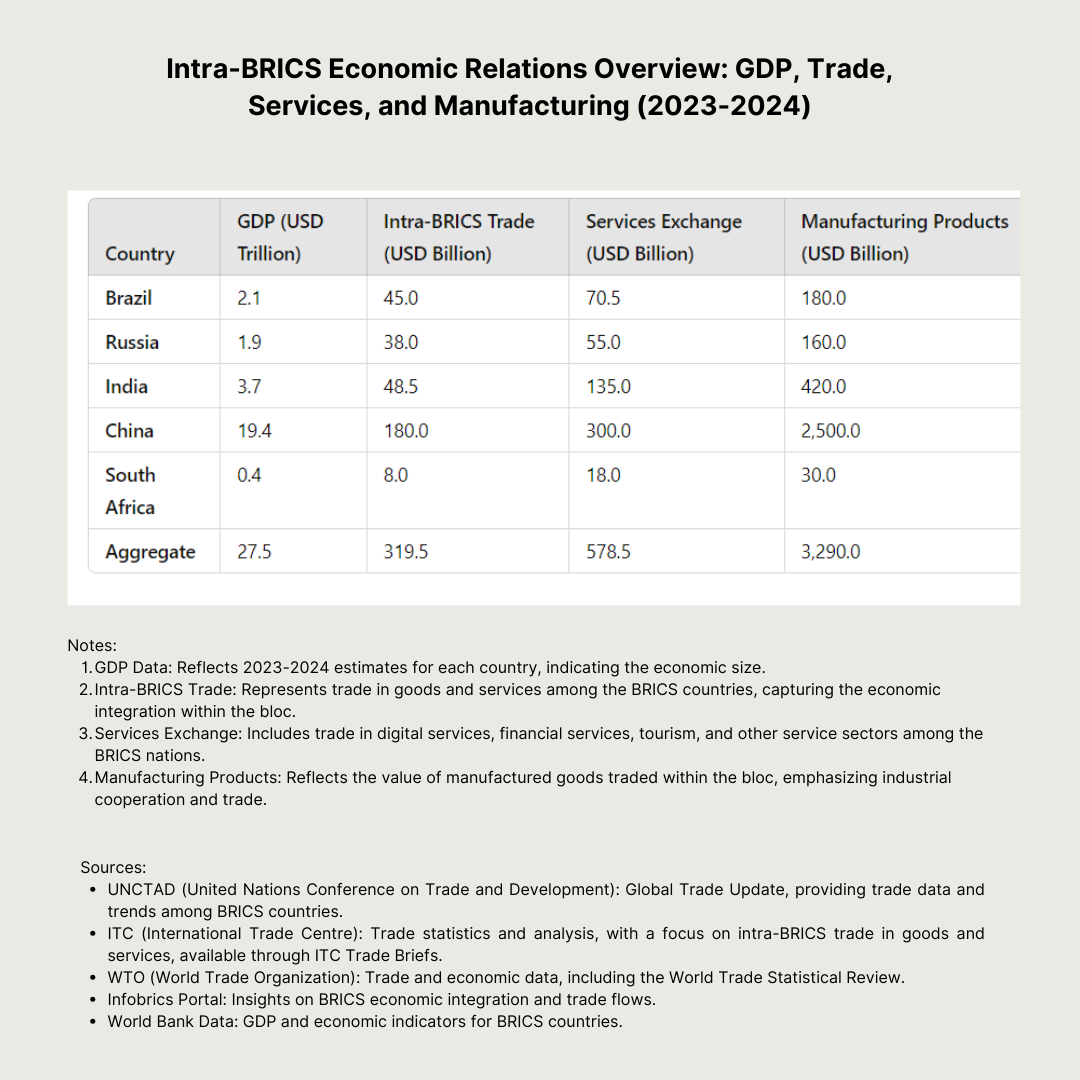
The accelerated growth of intra-BRICS trade is particularly noteworthy against the backdrop of a 3% contraction in global trade during 2023, with a 5% decline in goods trade attributable to slowdowns in advanced economies, supply chain dislocations, and geopolitical tensions. By contrast, BRICS countries have demonstrated a unique capacity to withstand such headwinds, largely due to structural shifts aimed at strengthening regional integration and promoting trade diversification. The intra-BRICS trade ecosystem, increasingly characterized by exchanges in crude oil, gas, high-tech goods, and agricultural commodities, accounted for 37% of the bloc’s total trade in 2023. This upward trajectory underscores a significant realignment towards intra-regional trade, which contrasts with the stagnation observed in many developed markets.
The trend aligns with the principles of endogenous growth theory, which suggests that economic collaboration and trade within regions can lead to more sustainable and inclusive growth by leveraging internal resources and capabilities. For BRICS, intra-bloc trade serves as a mechanism for rebalancing economic power and fostering a multipolar world order, providing an alternative narrative to the dominant North-South economic paradigm.
Sectoral Contributions to Intra-BRICS Trade Growth
The diversification of intra-BRICS trade is evident across multiple sectors, each contributing to the bloc’s economic fortification and resilience against global economic uncertainties. This sectoral growth not only strengthens the economic foundations of individual member states but also fosters deeper integration and interdependence, creating a more robust and interconnected economic region capable of long-term development.
Energy Trade: The Core of BRICS’ Economic Synergy
The energy sector remains a cornerstone of intra-BRICS trade, with significant flows of crude oil, natural gas, and coal between member countries. Russia and Brazil have solidified their roles as key energy exporters to China and India, the bloc’s largest energy consumers. This intra-regional energy trade not only supports economic growth but also enhances energy security, reducing the BRICS nations’ vulnerability to external supply shocks and price volatilities. The focus on internal energy markets aligns with the notion of strategic autonomy in economic policy, whereby states aim to secure critical resources through regional rather than global supply chains.
Agriculture: Bridging Food Security Gaps
Agricultural trade is another critical pillar, driven by rising demand for commodities such as soybeans, wheat, and meat products in populous countries like China and India. Brazil and Russia have capitalized on their extensive agricultural sectors to meet these demands, resulting in robust trade flows that also facilitate technology transfers and investment in agricultural infrastructure. This approach is consistent with the new structural economics framework, which emphasizes the role of sector-specific development policies in fostering structural transformation within emerging economies.
Technology and Digital Services: Leveraging Comparative Advantages
The digital transformation accelerated by the COVID-19 pandemic has further integrated the BRICS economies, particularly through technology and digital services trade. India’s expertise in information technology and software development complements China’s manufacturing prowess, creating a synergistic environment for the exchange of high-tech goods and services. This convergence not only expands trade volumes but also enhances the bloc’s competitive position in the global digital economy.
Environmental Goods: Aligning Trade with Sustainable Development
The increasing trade in environmental goods, such as electric vehicles and renewable energy technologies, represents a forward-looking shift in BRICS’ trade strategy. China’s leadership in electric vehicle production has catalyzed intra-BRICS trade in sustainable technologies, aligning with global efforts to combat climate change and promote green growth. The expansion of this trade segment, which grew by 2% in 2023 despite a broader decline in manufactured goods trade, signals the bloc’s commitment to embedding sustainability within its economic agenda.
Strategic Drivers and Policy Implications
Several factors underpin the growth of intra-BRICS trade, each with significant policy implications:
- Strategic Diversification and Resilience Building: By fostering intra-regional trade, BRICS countries are effectively hedging against the risks associated with overdependence on developed markets. This strategic diversification supports the development of autonomous economic ecosystems capable of sustaining growth amid global uncertainties.
- South-South Cooperation as a Development Paradigm: Enhanced South-South cooperation has facilitated the exchange of knowledge, technology, and investment, driven in part by the BRICS New Development Bank’s financing of infrastructure projects that improve trade connectivity. This approach is informed by dependency theory, which argues for reducing reliance on developed economies to achieve sustainable development.
- Trade Agreements and Policy Harmonization: The adoption of regional trade agreements and memoranda of understanding has streamlined customs procedures, reduced trade barriers, and promoted the free flow of goods and services. These policy measures are crucial for enhancing the efficiency of intra-BRICS trade and strengthening economic integration.
Prospects for 2024 and Beyond
The outlook for intra-BRICS trade remains robust, with several trends poised to shape its trajectory in 2024:
- Expansion of Services Trade: The services sector, particularly digital services, is expected to play a more prominent role in intra-BRICS trade, building on the 8% increase observed in 2023. This growth will be driven by continued digital transformation and deeper integration of technology ecosystems within the bloc.
- Sustainability and Environmental Goods Trade: The emphasis on sustainable development will accelerate trade in renewable energy technologies and climate-friendly goods, as BRICS nations implement policies to reduce carbon emissions.
- Strengthened Trade Agreements: The BRICS bloc may pursue more comprehensive trade agreements to further deepen economic ties, harmonize regulatory standards, and facilitate trade. Enhanced cooperation in customs and logistics will be key to expanding trade volumes.
A Resilient and Evolving Economic Bloc
The evolution of intra-BRICS trade reflects a significant shift in global economic dynamics, characterized by the bloc’s proactive efforts to foster regional integration and economic resilience. The focus on energy, agriculture, technology, and environmental goods underscores the potential for BRICS to redefine trade patterns and drive inclusive growth. While challenges such as geopolitical risks and infrastructure limitations persist, the outlook for 2024 is optimistic. Continued strategic efforts, including the strengthening of trade agreements and the promotion of South-South cooperation, will be essential for sustaining growth and unlocking new trade opportunities within this evolving economic bloc.
The BRICS experience highlights the potential of emerging markets to not only weather global economic storms but also to shape the future of international trade and economic governance.
Author Profile
-
Dr. Perumal Koshy is Editor of Global SME News and Director of Strategic Initiatives at Enterprise Futures Lab. He writes on MSMEs, enterprise development, and policy issues affecting small business ecosystems.
Linkedin: https://www.linkedin.com/in/caushie/
Twitter: https://twitter.com/pkoshyin
Latest entries
 FEATURED25 November 2024Rethinking Work Hours: The Case for Balance in SME Growth Strategies?
 AI25 November 2024Microsoft’s ‘Zero Day Quest’: A $4 Million Challenge to Revolutionize AI and Cloud Security!
 FEATURED5 November 2024Collaboration Agreement Signed Between Mubadala Energy and Perusahaan Listrik Negara (PLN) to Explore Harnessing Natural Gas Discoveries
FEATURED23 October 2024Resilient Trade Amid Global Uncertainty: How Intra-BRICS Commerce is Shaping a New Economic Order
Comment on “Resilient Trade Amid Global Uncertainty: How Intra-BRICS Commerce is Shaping a New Economic Order”