


As the world adapts to rapid technological advances, the dawn of Industry 5.0 marks a pivotal shift in the landscape of manufacturing and enterprise. Building upon the foundations laid by Industry 4.0, which focused on automation, the Internet of Things (IoT), and data exchange, Industry 5.0 introduces a crucial element to the equation: the human touch. With an emphasis on human-machine collaboration, personalized manufacturing, and sustainable innovation, Industry 5.0 is particularly transformative for small and medium enterprises (SMEs), offering opportunities to enhance efficiency while empowering their workforce.
Human-Centric Manufacturing: Redefining Roles
At the core of Industry 5.0 is the idea of human-centric manufacturing, where machines and technology serve as enablers, working in harmony with humans rather than replacing them. In contrast to Industry 4.0’s push toward automation, Industry 5.0 seeks to bring back human creativity, intelligence, and problem-solving into the production process. This human-machine collaboration focuses on utilizing robots and artificial intelligence (AI) to perform repetitive, labor-intensive tasks while leaving decision-making, customization, and innovation to the human workforce.
For SMEs, this collaboration offers several benefits. By leveraging machines to handle monotonous tasks, employees can shift their focus to value-added activities such as product design, quality control, and innovation. This not only improves operational efficiency but also enhances the overall work experience, making jobs more fulfilling and engaging. SMEs, known for their agility and adaptability, are particularly well-suited to capitalize on this shift, as their relatively smaller scale allows for quicker integration of these new technologies into their workflows.
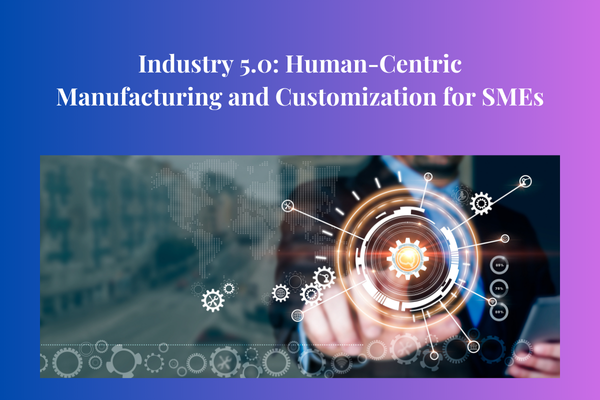
Personalized Manufacturing: Meeting the Demand for Customization
One of the hallmark features of Industry 5.0 is the emphasis on personalized manufacturing. Consumers today demand products tailored to their specific needs and preferences, and Industry 5.0 makes this level of customization feasible. By combining AI, machine learning, and human input, manufacturers can produce customized products with the same efficiency and cost-effectiveness as mass-produced items.
For SMEs, this shift towards personalized manufacturing presents significant opportunities. Unlike large-scale manufacturers that rely on uniformity and volume for profitability, SMEs can carve out a competitive edge by offering bespoke, high-quality products that meet the unique needs of individual customers. Furthermore, with advances in additive manufacturing (such as 3D printing) and flexible production lines, SMEs can adopt a more responsive and scalable approach to production, allowing them to quickly adapt to changing customer demands and market trends.
Innovation and Workforce Development: Balancing Technology and Human Skills
While Industry 5.0 offers exciting prospects for innovation, it also highlights the importance of workforce development. As the nature of manufacturing evolves, so too must the skills of the workforce. SMEs must strike a delicate balance between investing in cutting-edge technology and ensuring that their employees are equipped to work alongside these technologies.
Upskilling and reskilling are essential in this context. As human workers collaborate with intelligent machines, they need to possess not only technical skills but also problem-solving abilities, creative thinking, and adaptability. SMEs can invest in training programs that focus on human-machine interaction, data literacy, and advanced manufacturing techniques. By prioritizing workforce development, SMEs ensure that their employees remain integral to the production process while also harnessing the full potential of technological advancements.
Moreover, Industry 5.0 opens new avenues for innovation in how SMEs approach workforce management. With the rise of automation for routine tasks, companies can shift towards more flexible work environments, encouraging remote work, flexible hours, and greater employee autonomy. This human-centered approach to business aligns with the broader goals of Industry 5.0, where employee satisfaction and creativity drive innovation and success.
Sustainability and Social Responsibility
Another defining characteristic of Industry 5.0 is its commitment to sustainability and social responsibility. As industries around the world grapple with the challenges posed by climate change and resource depletion, there is a growing emphasis on sustainable manufacturing practices. For SMEs, adopting sustainable practices is not only beneficial for the environment but can also be a key differentiator in the marketplace.
Through human-centric approaches and the integration of advanced technologies, Industry 5.0 encourages the development of energy-efficient production processes, waste reduction, and the use of renewable resources. SMEs can leverage Industry 5.0 innovations to reduce their environmental footprint while maintaining profitability and competitiveness. Additionally, with consumers increasingly prioritizing ethical and sustainable products, SMEs that champion these values will be well-positioned to capture market share.
Challenges and Opportunities for SMEs
While Industry 5.0 presents numerous opportunities for SMEs, it also comes with challenges. The integration of new technologies, such as collaborative robots (cobots), AI, and advanced manufacturing tools, requires financial investment. For many SMEs, securing the necessary capital for technological upgrades may pose a significant hurdle.
However, governments and industry bodies are recognizing the importance of SMEs in driving economic growth and innovation. As a result, there are increasing efforts to support SMEs in transitioning to Industry 5.0 through grants, subsidies, and training programs. Additionally, partnerships with larger corporations or technology providers can offer SMEs access to cutting-edge tools and expertise, facilitating their shift toward human-centric manufacturing.
Despite these challenges, the long-term benefits of Industry 5.0 for SMEs are clear. By embracing human-machine collaboration, personalized manufacturing, and workforce development, SMEs can enhance productivity, improve customer satisfaction, and foster a culture of innovation. In doing so, they will not only remain competitive in a rapidly changing landscape but also contribute to shaping a more sustainable and inclusive future for manufacturing.
Industry 5.0 is poised to transform the way we think about manufacturing, and for SMEs, it represents a unique opportunity to blend innovation with human-centered practices. By focusing on human-machine collaboration and personalized manufacturing, SMEs can harness the power of technology while empowering their workforce. The success of this new industrial era will depend on the ability of SMEs to balance technological advancements with workforce development, ultimately creating a more resilient, innovative, and sustainable manufacturing ecosystem. For SMEs willing to embrace the principles of Industry 5.0, the future promises not just survival but thriving in a new age of human-centric innovation.
Author Profile
Latest entries
 Entreprenurs7 August 2026More Enabling Digital Regulations Could Add ₩2.4 Trillion (US$1.73 Billion) in Annual VC Investment for South Korean Startups: Oxford Economics
 AI24 July 2026The Creator Economy Platform Market: AI, Digital Entrepreneurship, and the Future of Online Business
 FEATURED9 July 2026Bluevine Expands U.S. Business Banking Solutions to India-Based Entrepreneurs
 FEATURED2 April 2026Parametric Weather Insurance Emerges as a Strategic Risk Instrument for SMEs Amid Rising Climate Volatility