






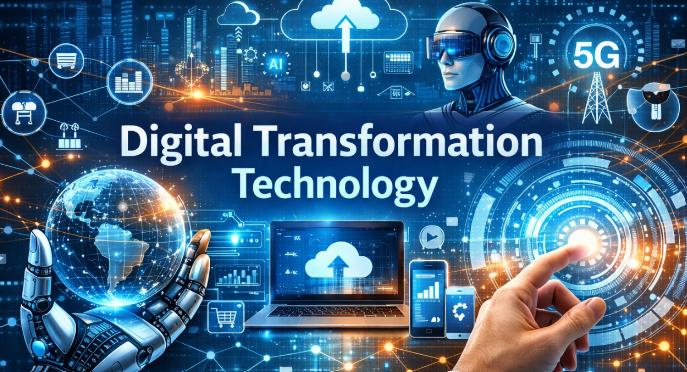
According to Growth Market Report, the global digital transformation technology
market size stands at $1,680.3 billion in 2024, reflecting the rapid adoption of advanced
digital solutions across industries. The market is experiencing robust expansion with a CAGR
of 20.7% from 2025 to 2033. By the end of 2033, the digital transformation technology
market is projected to reach approximately $10,795.8 billion. This remarkable growth is
primarily driven by the increasing need for operational efficiency, enhanced customer
experience, and the integration of next-generation technologies such as artificial
intelligence, cloud computing, and IoT across various sectors.
Introduction
The digital transformation technology market is no longer a futuristic concept—it is a
present-day necessity. Organizations across the globe are embracing digital tools to redefine
how they operate, deliver value, and compete. From small startups to multinational enterprises, the push toward digitalization is accelerating at an unprecedented pace,
creating a dynamic and rapidly evolving market landscape.
What is Digital Transformation Technology?
Digital transformation technology refers to the integration of digital tools and systems into
all aspects of a business. It fundamentally changes how organizations operate and deliver
value to customers. This transformation goes beyond simple automation; it involves cultural
change, process optimization, and the adoption of innovative technologies such as cloud
computing, artificial intelligence, big data analytics, and the Internet of Things (IoT).
Market Overview and Growth Dynamics
The digital transformation technology market has witnessed remarkable growth over the
past decade. Increasing internet penetration, the proliferation of smart devices, and the
demand for real-time data insights are major contributors to this expansion.
Organizations are investing heavily in digital infrastructure to stay competitive in a fast-
changing environment. The COVID-19 pandemic further accelerated this trend, pushing
businesses to adopt remote working solutions, digital communication platforms, and online
service delivery models.
Key Drivers Fueling Market Expansion
- Rising Demand for Customer-Centric Solutions
Modern consumers expect personalized and seamless experiences. Businesses are
leveraging digital technologies to analyze customer behavior and deliver tailored services,
driving demand for advanced digital transformation solutions. - Growth of Cloud Computing
Cloud platforms offer scalability, flexibility, and cost-efficiency. Companies are increasingly
migrating their operations to the cloud to enhance productivity and reduce operational
costs. - Data-Driven Decision Making
The ability to collect and analyze large volumes of data has become a critical advantage.
Organizations are investing in analytics tools to gain actionable insights and make informed
decisions. - Automation and Efficiency
Automation technologies are streamlining business processes, reducing human error, and
improving operational efficiency. This is particularly important in industries such as
manufacturing, healthcare, and finance.
Emerging Technologies Shaping the Market
Artificial Intelligence and Machine Learning
AI and ML are transforming industries by enabling predictive analytics, intelligent
automation, and enhanced customer interactions. These technologies are becoming integral
to digital transformation strategies.
Internet of Things (IoT)
IoT connects devices and systems, enabling real-time monitoring and data exchange. It plays
a crucial role in sectors like manufacturing, logistics, and smart cities.
Blockchain Technology
Blockchain is enhancing transparency, security, and trust in digital transactions. It is gaining
traction in finance, supply chain management, and healthcare.
Edge Computing
Edge computing reduces latency by processing data closer to the source. This is particularly
important for applications requiring real-time responses, such as autonomous vehicles and
industrial automation.
Industry-Wise Adoption Trends
Healthcare
Digital transformation is revolutionizing healthcare through telemedicine, electronic health
records, and AI-driven diagnostics. It improves patient care and operational efficiency.
Banking and Financial Services
Financial institutions are adopting digital technologies to enhance security, streamline
operations, and offer innovative services such as mobile banking and digital payments.
Retail and E-commerce
Retailers are leveraging digital tools to provide personalized shopping experiences, optimize
supply chains, and manage inventory effectively.
Manufacturing
Smart manufacturing, powered by IoT and automation, is improving productivity and
reducing downtime. Predictive maintenance and real-time monitoring are key benefits.
Challenges in the Digital Transformation Journey
High Implementation Costs
The initial investment required for digital transformation can be significant, especially for
small and medium-sized enterprises.
Cybersecurity Concerns
As businesses become more digital, they are increasingly vulnerable to cyber threats.
Ensuring data security and privacy is a major challenge.
Skill Gaps
There is a growing demand for skilled professionals who can manage and implement
advanced digital technologies. The shortage of such talent can hinder progress.
Resistance to Change
Organizational culture plays a crucial role in digital transformation. Resistance from
employees and management can slow down adoption.
Competitive Landscape
IBM Corporation
Microsoft Corporation
SAP SE
Oracle Corporation
Accenture PLC
Cognizant Technology Solutions
Capgemini SE
Tata Consultancy Services (TCS)
Deloitte
Infosys Limited
Hewlett Packard Enterprise (HPE)
Amazon Web Services (AWS)
Google LLC
Wipro Limited
Siemens AG
Salesforce.com, Inc.
Cisco Systems, Inc.
DXC Technology
Tech Mahindra
Altran Technologies (Capgemini Engineering)
Future Trend
According to Growth Market Report, The future of the digital transformation
technology market looks promising, with continuous advancements in technology and
increasing adoption across industries. Emerging trends such as 5G connectivity, quantum
computing, and advanced robotics are expected to further accelerate market growth.
Organizations that embrace digital transformation will be better positioned to adapt to
changing market conditions, enhance customer experiences, and achieve long-term success.
Author Profile
Latest entries
 FEATURED24 July 2026SME Chamber of India Appoints Jhumarmal Tunwal, Chairman & Managing Director of Tunwal E-Motors as Vice President
 FEATURED23 July 2026Neuberg Diagnostics Cuts Manual HR Tasks by 90% Through AI-Powered HR Transformation with OfficeNet
 FEATURED23 July 2026Gen Z Insurance Advisors Lead in Policy Volumes, While Experienced Advisors Drive Deep Protection Conversations: Probus Report
 FEATURED16 July 2026Currys Business Expands Business Hub Network to Strengthen Technology Support for UK SMEs