



‘A Kerala Connection Worth Remembering’
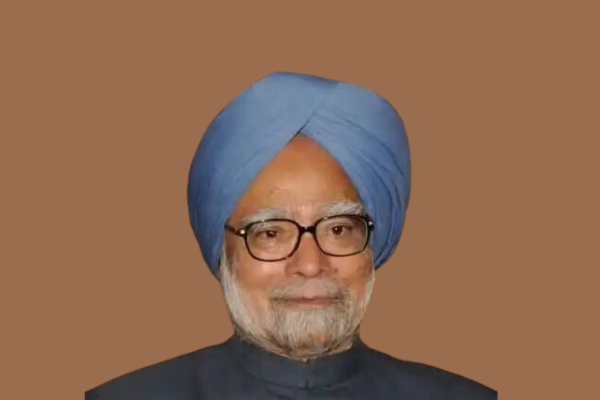
Dr. Manmohan Singh, a noted economist and India’s thirteenth Prime Minister, is no more. His tenure as Prime Minister was often marked by criticism, particularly for his perceived affinity towards Kerala and pro-South India policies. However, these critiques often overshadowed his unwavering professionalism and pragmatic approach to policymaking. Dr. Singh’s commitment to sound economic governance and reform earned him both admiration and, at times, undue scrutiny, making him a frequent scapegoat in political debates.
Manmohan’s contributions to India’s industrial economy are often perceived by popular media in terms of the New Industrial Policy (1990); in fact, it was more broadbased. Beyond his roles as a bureaucrat-turned-politician, Dr. Singh inspired generations of budding economists. Among them was Dr. P. M. Mathew, who recalls his association with Dr. Singh during his tenure as Deputy Chairman of the Planning Commission. According to Dr. P. M. Mathew, Dr. Manmohan Singh was a transformative leader whose pragmatic approach to policymaking and unwavering professionalism left a lasting impact on his colleagues and collaborators.
Fostering Industrial Renewal: Dr. Singh’s Vision and Collaborative Leadership
In his commitment to rejuvenating India’s industrial sector, Dr. Singh established the ‘Industrial Economists Group’ on November 29, 1986. What set this initiative apart was his openness to ideas from professionals across diverse experiences and affiliations, breaking away from the rigidities of typical government committees.
Dr. Singh’s interest in the unorganized sector brought him to the work of a young economist, Dr. P. M. Mathew, then affiliated with the Indian Council of Social Sciences Research (ICSSR). Recognizing the depth of Mathew’s research, Dr. Singh engaged him to conduct an in-depth study on Kerala’s industrial backwardness despite the state’s otherwise impressive socio-economic indicators, brought vociferously into academic debates by his teacher, K.N.Raj- the socalled “Kerala Model of Development”. This collaboration marked a turning point in Dr. Mathew’s career and reshaped policy discussions on Kerala’s development trajectory.
Decoding Kerala’s Industrial Stagnation
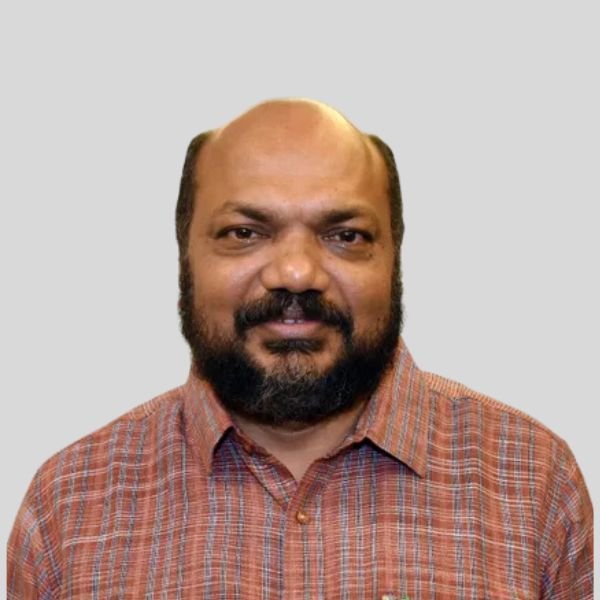
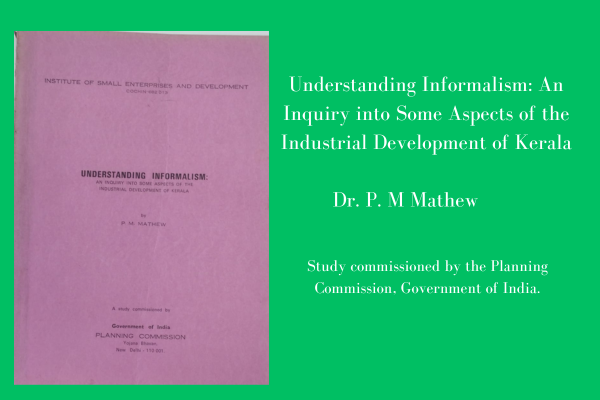
Until then, much of Kerala’s economic analysis followed a political economy approach. Dr. Mathew’s study, conducted at the Institute of Small Enterprises and Development (ISED), introduced a fresh perspective. Mathew’s report, entitled “Understanding Informalism:An Enquiry into Some Aspects of the Industrial Development of Kerala”, identified Kerala as a rentier economy, significantly influenced by foreign remittances during the period of 1975–1985. The report also highlighted the diminishing effects of the State’s Land Reforms(1970), which had initially spurred economic optimism but later gave way to a “new middle class” with impractical aspirations. Political parties, eager to gain favor, supported this emerging demographic at the expense of the much needed industrial growth.
This overemphasis on welfare measures, a by-product of the foreign remittances era, sidelined the State’s industrial and entrepreneurial potential, rendering the industrial sector a casualty of uncritical populist policies.Hence, the progressive steps take by the State,post Land Reforms,were left half way through.
A Blueprint for Kerala’s Development
Dr.Mathew’s research produced a comprehensive policy framework, emphasizing a shift towards private-sector-led development. Key recommendations included campaign-driven interventions, Lead Industries approach, SME-focused strategies, the creation of Entrepreneurs’ Panchayats, and the establishment of Entrepreneurship Development Clubs. These proposals aimed to foster a robust entrepreneurial ecosystem and realign Kerala’s industrial priorities.
The report, submitted to the Planning Commission on October 29, 1990, continues to be a cornerstone of Kerala’s policy discourse. Over three decades later, many of its recommendations—such as the Year of Entrepreneurship,Samrambhaka Sabha (“Udyami Panchayat’), and Entrepreneurship Clubs—are finally seeing implementation, thanks to the new vision of the Government of Kerala, named under the rubric, “Navakeralam”and of the dynamic leadership of the Industries Minister, P. Rajeeve. As the saying goes, “better late than never”.
Public policy lies at the intersection of politics and economics, a delicate balance that demands evidence-based interventions beyond ideological straight-jackets, says Dr.Mathew. In political science, a political ideology is a certain set of ethical ideals, principles, doctrines, myths or symbols of a social movement, institution, class or large group that explains how society should work and offers some political and cultural blueprint for a certain social order. While political ideology is not a fifth wheel, in a democracy, elections are fought and won on the plank of popular aspirations. The Statesman, in turn, is voted to power by the Legislature, a cream of the political society. However, ‘economic governance’, beyond popular perceptions, is a tight rope, which defines the mettle of leadership.
A statesman/woman is a respected, skilled and experienced political leader or figure. In most respects a statesman is the opposite of a politician. Politicians are thought of as people who are driven by power. Kerala’s journey underscores the importance of such a realisation. Dr. Manmohan Singh’s legacy in this regard is a reminder of the power of thoughtful, inclusive policymaking to reshape economies.
In celebrating Dr. Singh’s life and contributions, Kerala’s policymakers and citizens alike can find inspiration in his pragmatic vision and enduring commitment to development. His work remains a testament to the transformative potential of leadership guided by intellect and evidence.
Author Profile

-
Dr. Perumal Koshy is associated with the Enterprise Futures Lab and is a columnist focused on institutional governance and economic systems. He writes on MSMEs, enterprise development, and policy issues affecting small business ecosystems.
Linkedin: https://www.linkedin.com/in/caushie/
Latest entries
 FEATURED18 July 2026The New Generation of FTAs: Why Services Are Replacing Tariffs as the Main Trade Issue
 FEATURED11 July 2026Beyond Startup Disruption: Why Innovation Must Strengthen Industrial Ecosystems, Not Weaken Them
 FEATURED13 June 2026Beyond Startups and SMEs: Towards an Integrated Enterprise Ecosystem for the Future
 ESG6 June 2026The Scale Obsession: When Institutions Become Bigger Than Their Purpose