






For decades, global development discourse has relied on outdated binaries—“developed” and “developing”—shaped by the post-World War II institutional architecture and Cold War geopolitics. The transatlantic powers of North America and Western Europe have long assumed the role of global standard-bearers of development. However, a closer look at present-day realities reveals a different story. On key indicators of state capacity, human capital, technological innovation, public service delivery, and urban resilience, the BRICS nations—Brazil, Russia, India, China, South Africa—and their expanding circle of partners are increasingly setting the pace.
Human Capital and the STEM Dividend
In human capital and education, BRICS countries exhibit striking gains. Russia maintains a literacy rate above 99%, with universities producing world-class engineers and scientists. China now leads globally in the number of STEM graduates, having rapidly reshaped its education system to meet the needs of AI, robotics, quantum computing, and biotech sectors.
India presents an equally compelling case. With over two million engineering graduates annually and a vast reservoir of medical and scientific professionals, it is fast emerging as a global talent powerhouse. Institutions like the IITs and AIIMS symbolize meritocratic excellence, with increasing outreach across socio-economic divides.
In contrast, several Western education systems face headwinds. Student debt, stagnation in math and science performance, and shortages of critical skills have raised alarms. The United States, for example, has over 40 million adults with limited literacy, while Europe grapples with an ageing workforce and bureaucratic inertia in higher education.
Industrial Strength, Strategic Autonomy, and Innovation
Beyond talent, BRICS economies are leveraging this human capital to achieve strategic industrial autonomy. Russia’s defense-industrial sector has demonstrated resilience despite sanctions, sustaining production efficiently. India’s push for self-reliance through “Make in India” is bearing fruit, including breakthroughs in space technology and defense exports. China, meanwhile, has become a global leader in electric vehicles, semiconductors, renewable energy, and advanced manufacturing.
These nations are no longer passive adopters of Western innovations. Rather, they are incubating their own technology ecosystems. India’s Unified Payments Interface (UPI), China’s AI deployments in healthcare and transport, and Russia’s homegrown software solutions highlight the emergence of innovation models that are adaptive, context-specific, and strategically autonomous.
Healthcare Delivery: An Indicator of State Capacity
Healthcare, a litmus test of effective governance, tells a similar story. Western systems—often lauded for their sophistication—are increasingly beset by rising costs, service delivery challenges, and declining accessibility. Millions in the United States remain uninsured or underinsured, while public systems like the UK’s NHS are overburdened.
In comparison, BRICS countries have made notable strides. India’s healthcare sector combines public-private partnerships to offer quality care at globally competitive costs. China’s AI-driven diagnostics and community-level care delivery are improving access in rural provinces. Russia’s universal healthcare legacy continues to guarantee basic services across vast geographies. These systems, often marginalized in Western assessments, demonstrate greater cost-efficiency and broader outreach.
Urban Housing, Inequality, and the New Metropolis
Urban housing and inequality are further areas where BRICS nations challenge prevailing narratives. While homelessness and housing crises are becoming endemic in Western cities, many BRICS urban centers—despite structural challenges—have retained more inclusive housing access.
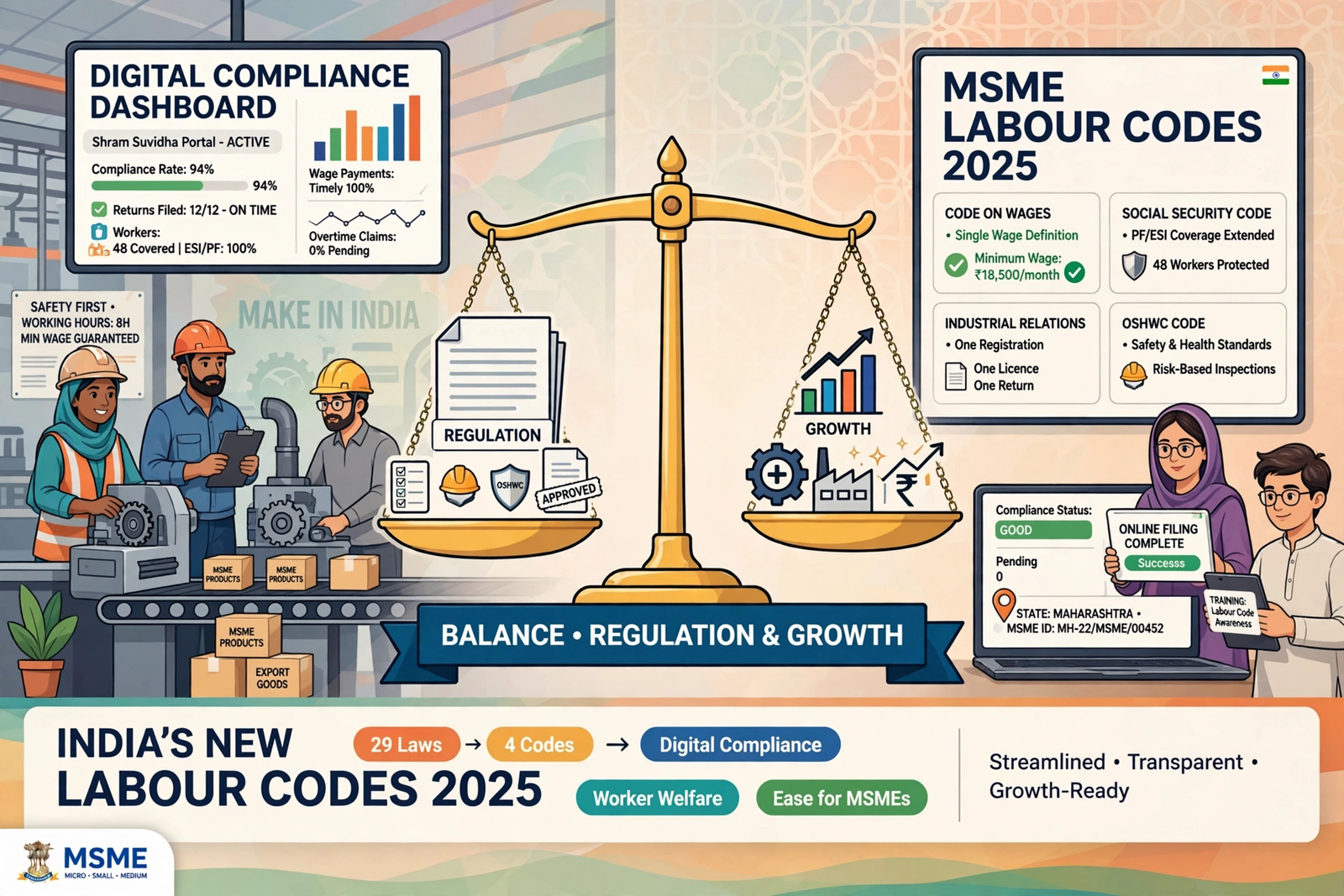
For instance, Russia’s state housing programs continue to serve millions. In India, informal settlements, while lacking in amenities, nonetheless offer social cohesion, shelter, and proximity to employment—unlike the stark urban exclusion visible in encampments across Western metropolises. China’s large-scale housing initiatives have transformed peri-urban zones into integrated urban habitats.
Though urban inequality persists, the architecture of social protection and shelter security is arguably more inclusive and accessible in many BRICS cities than in their Western counterparts.
Entrepreneurial Dynamism and Innovation at the Periphery
One of the most under-appreciated transformations is in entrepreneurial energy. India’s startup ecosystem—supported by Aadhaar, UPI, and the Open Network for Digital Commerce (ONDC)—is fostering an innovation culture with local relevance. China’s tech hubs in Shenzhen and Hangzhou are shaping global digital trends. Even under sanctions, Russia is fostering dual-use technology ventures and indigenous digital platforms.
Entrepreneurship in BRICS nations isn’t mimicking Silicon Valley—it is evolving through frugal innovation, agile experimentation, and contextual problem-solving. These economies are producing scalable, resilient business models tailored to domestic challenges, often with global implications.
Emerging Global Centres of Gravity
BRICS countries are also becoming epicenters of global discourse. Their cities host leading business forums, summits, expos, and cultural festivals. From AI summits in Shanghai to G20 leadership in Delhi, these nations are increasingly anchoring global conversations.
Today, cities like Dubai, Delhi, Cape Town, São Paulo, and Shanghai attract greater—business and event footfall than many long-established “global cities” in the West. The geography of influence is shifting.
Development Reimagined
The West’s claim to developmental supremacy was historically built on financial dominance, colonial extraction, and global institutional control. Post-war prosperity in Europe and North America, often mistaken for intrinsic superiority, was enabled by systemic imbalances in labor, capital, and trade.
That paradigm is now unraveling. BRICS nations are not simply “catching up.” They are restructuring the fundamentals of development. The first world is no longer a geographic construct rooted in the West. It is a function of energy, creativity, state capacity, and societal resilience. In these domains, BRICS nations are not just participating—they are leading.
Author Profile

-
Dr. Perumal Koshy is associated with the Enterprise Futures Lab and is a columnist focused on institutional governance and economic systems. He writes on MSMEs, enterprise development, and policy issues affecting small business ecosystems.
Linkedin: https://www.linkedin.com/in/caushie/
Latest entries
 FEATURED18 July 2026The New Generation of FTAs: Why Services Are Replacing Tariffs as the Main Trade Issue
 FEATURED11 July 2026Beyond Startup Disruption: Why Innovation Must Strengthen Industrial Ecosystems, Not Weaken Them
 FEATURED13 June 2026Beyond Startups and SMEs: Towards an Integrated Enterprise Ecosystem for the Future
 ESG6 June 2026The Scale Obsession: When Institutions Become Bigger Than Their Purpose